
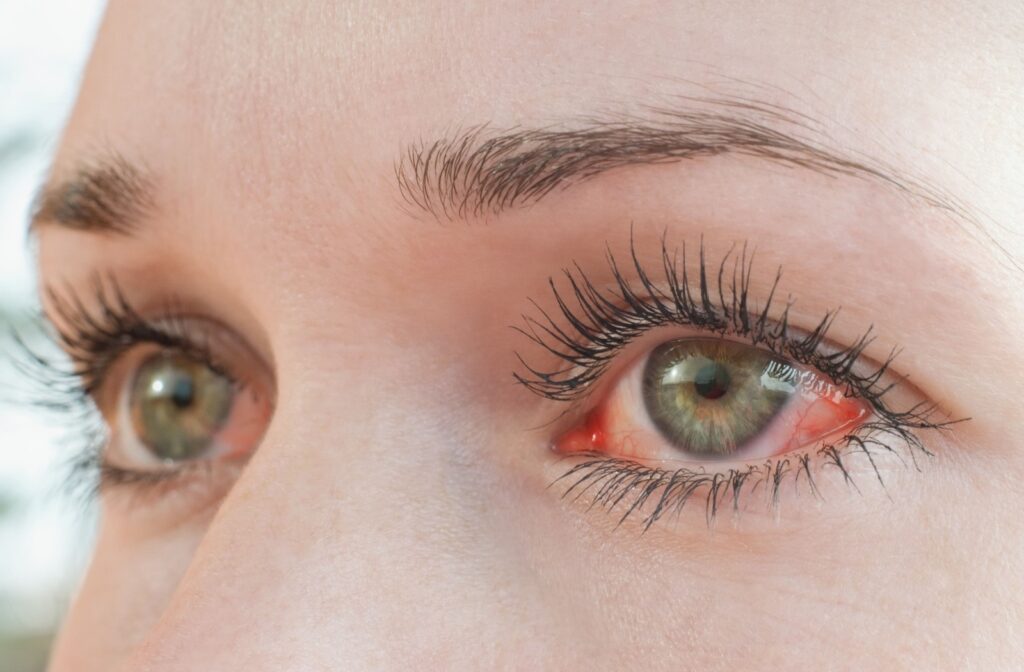
You notice your eye is red and irritated, and immediately think “pink eye.” But that gritty feeling and persistent discomfort might actually be something completely different. Your symptoms could be pointing to dry eye disease, allergies, or eyelid inflammation instead.
Dry eye disease, allergic reactions, and blepharitis are the most common conditions misdiagnosed as pink eye because they can share similar redness and irritation symptoms. Getting the right diagnosis means you can finally get relief that actually works for your specific condition. Elevation Vision helps patients in Castle Rock identify the true cause of their eye irritation through comprehensive diagnostics.
Common Eye Conditions That Look Like Pink Eye
Dry Eye Disease
When your tear film breaks down or doesn’t produce enough quality tears, your eyes are left feeling dry and irritated. This chronic inflammation can even create the same angry, bloodshot appearance you’d see with pink eye.
The missing piece that often gets overlooked is tear film quality. Even if your eyes water constantly, those tears might not have the right balance of oils and proteins to keep your eyes comfortable and clear.
Allergic Reactions
Seasonal allergens like pollen or pet dander can trigger your immune system to release histamines, making your eyes red, itchy, and watery. These symptoms are almost identical to those of infectious pink eye.
The telltale difference is that allergies typically affect both eyes at the same time, while pink eye often starts in one eye before spreading to the other.
Blepharitis and Eyelid Problems
When your eyelid margins become inflamed, redness can spread to your entire eye area. You’ll often wake up with crusty discharge along your lash line that looks suspiciously like an infection.
This condition often involves your meibomian glands—the tiny oil glands lining your eyelids that help prevent tears from evaporating too quickly.
Why These Conditions Get Confused
All of these conditions can make your eyes look red and angry. The blood vessels in your eye dilate in response to irritation, creating that classic “pink eye” appearance regardless of the actual origin.
You’ll also notice discharge and excessive tearing with most of these conditions. Crusty eyes or a stick feeling in the morning can happen whether you have an infection or chronic dry eye.
The burning and stinging sensations feel remarkably similar across different eye conditions. Your brain interprets inflammation the same way, whether it comes from bacteria, allergens, or tear film problems.
That gritty, sandy feeling under your eyelids can signal anything from dry eye to blepharitis. Light sensitivity also occurs with multiple conditions, making it an unreliable indicator for self-diagnosis.
Key Differences to Watch For
Pink Eye Characteristics
True pink eye typically hits you suddenly with thick, colored discharge that’s yellow or green. If it’s bacterial, you’ll often see it spread from one eye to the other within a day or 2.
Most cases of viral or bacterial pink eye resolve on their own within a week. The symptoms are intense but relatively short-lived compared to chronic conditions.
Other Condition Patterns
Dry eye and allergies tend to develop gradually. You might notice your eyes feeling slightly uncomfortable for weeks before the redness becomes obvious.
These chronic conditions often come and go in response to environmental factors such as air conditioning, screen time, or seasonal changes. They’re also frequently linked to other health issues like autoimmune disorders or hormonal changes.

When Professional Diagnosis Matters
Persistent Symptoms
If your red, irritated eyes don’t improve after 3–4 days, you’re likely dealing with something more complex than typical pink eye. Recurring episodes that happen monthly or seasonally point to chronic conditions that need targeted treatment.
Any vision changes or severe pain should prompt immediate professional evaluation. These symptoms can indicate serious complications that over-the-counter treatments can’t address. Emergency eye care can become necessary when symptoms worsen or affect your vision.
Complex Cases
Many people have multiple eye conditions happening simultaneously. You might have both dry eye and seasonal allergies, making it nearly impossible to determine the primary factor without professional testing.
If you’ve tried treating “pink eye” multiple times without success, you likely need a comprehensive evaluation to identify the real culprit behind your symptoms.
Professional Eye Examination Benefits
Modern diagnostic technology can measure your tear film quality, identify specific types of inflammation, and detect underlying conditions. These tests help pinpoint exactly what’s causing your red, irritated eyes.
Dry eye testing examines your meibomian glands, tear production, and ocular surface health to create a complete picture of your eye comfort issues.
Targeted Treatment Options
Once you know what’s really creating your symptoms, treatment becomes much more effective. Dry eye therapy plans can include everything from prescription eye drops to modern treatments like intense pulsed light (IPL) therapy.
Find the Right Relief
Getting the right diagnosis from an eye doctor in Castle Rock means you can finally move beyond temporary relief to long-term management strategies. At Elevation Vision, our team combines medical experience with modern diagnostic tools to identify the specific factors behind your eye irritation and develop treatment plans that provide lasting comfort. Book your appointment today to find relief.