
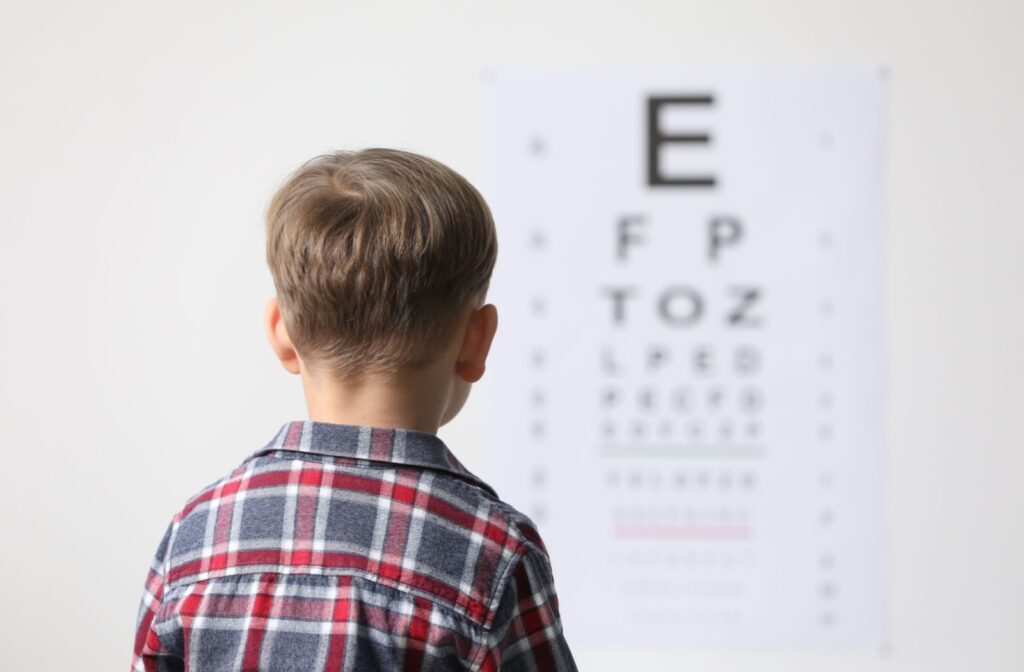
Maybe you’re squinting to read street signs that used to be crystal clear, or you can barely see the movie screen when you go to the theater. These signs might be myopia, commonly known as nearsightedness, and you may be wondering whether you can regain your crystal-clear vision.
Myopia cannot be completely reversed, but its progression can be slowed through various corrective solutions, management approaches, and lifestyle modifications. Our team at Elevation Vision has the knowledge and options to find a plan that works for you.
What Myopia Means for Your Vision
Myopia occurs when your eye grows too long from front to back. This shape change makes light focus in front of your retina (the back of your eye) instead of directly on it. This results in being able to see nearby objects clearly, while distant ones appear blurry.
Without proper management, myopia can get worse over time, especially in children, whose eyes are still growing. Higher levels of myopia are associated with an increased risk later in life of:
- Retinal detachment, which is a serious eye emergency that requires immediate attention.
- Glaucoma, a condition that can damage the nerve that sends signals to your brain.
- Age-related macular degeneration, which affects your central vision.
This is why managing the progression of myopia is important for protecting your long-term vision health.
Current Options for Clear Vision
These options are designed to improve your blurry vision without treating the underlying cause of nearsightedness. They focus on helping you see clearly today, but they don’t treat the progression of myopia.
Glasses
Prescription glasses offer the simplest way to improve clear distance vision. Modern lenses are thinner and lighter than ever, helping to give you crisp sight for driving, outdoor activities, and entertainment. You can choose from fashionable frames that match your style while providing the correction you need.
Contact Lenses
Contact lenses give you freedom from glasses during all your activities. Specialty contact lenses like scleral lenses provide exceptional comfort for people with dry eyes or irregular corneas. These larger lenses vault over your cornea and rest on the white part of your eye, creating a smooth surface.
Surgical Options
Surgical procedures like LASIK or PRK can eliminate or reduce your dependence on corrective lenses. These treatments work by reshaping your cornea (the clear, outer layer of your eye) to focus light properly on your retina. The results last for years, though age-related vision changes may still occur later in life.
Current Options for Myopia Management
Management Approaches
Myopia control methods focus on slowing progression, not reversing existing nearsightedness. Special contact lenses, prescription eye drops, and orthokeratology lenses worn overnight can help to slow the rate at which myopia worsens. These approaches are most effective when started during childhood, but can benefit some adults, too.
MiSight® Soft Contact Lenses
MiSight® soft contact lenses are specially designed for children with progressing myopia. These daily disposable lenses not only correct vision but also use a unique optical design that helps slow the elongation of the eye associated with worsening nearsightedness. Because they are worn during the day and replaced daily, they can be a convenient option for children who are comfortable wearing contact lenses.
Stellest® Myopia Control Glasses Lenses
For children who cannot tolerate contact lenses, Stellest® lenses offer a myopia management option in the form of glasses. These specialized lenses use advanced lens technology to help slow the progression of myopia while still providing clear everyday vision. Stellest lenses allow children to manage their vision with a familiar and comfortable solution while supporting long-term eye health.
Outdoor Time
Some research shows that spending time outdoors provides natural benefits for your eyes. Sunlight exposure and looking at distant objects give your visual system variety beyond close-up tasks. Children who play outside regularly show lower rates of myopia development, though adults can also benefit from outdoor activities.
Keep Your Eyes Comfortable
Take regular breaks from close-up work by following the 20-20-20 rule: Every 20 minutes, look at something 20 feet away for 20 seconds. Maintaining proper lighting while reading and keeping appropriate distances from screens can also help reduce eye strain. These habits won’t reverse myopia, but they can help keep your vision comfortable.
When Myopia Develops and Risk Factors
Myopia in Children
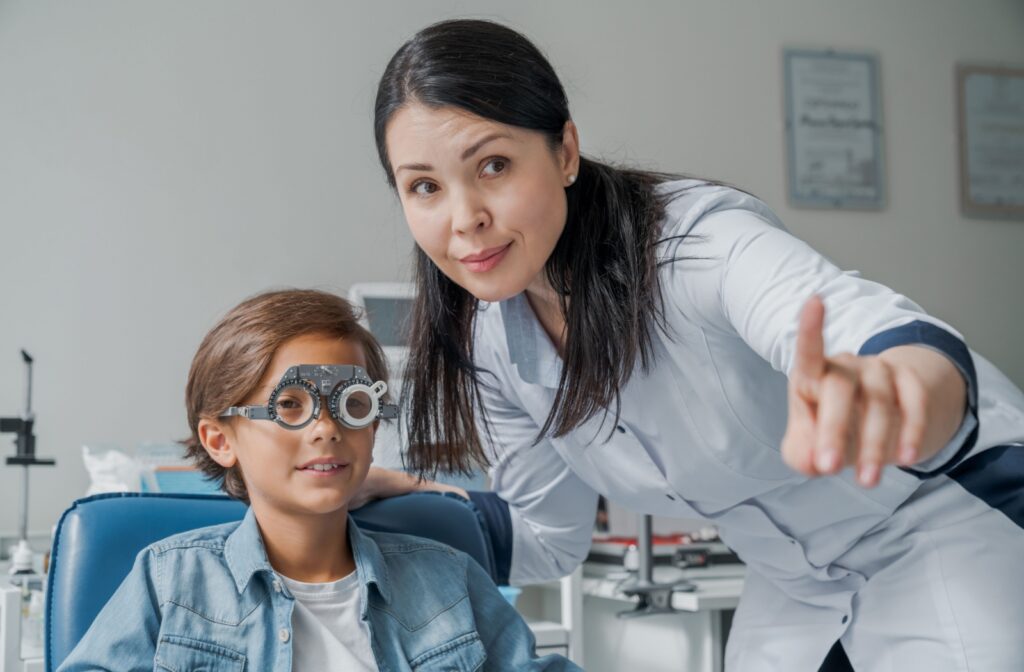
Most myopia begins during elementary school years when children start reading and doing more close-up work. The condition typically progresses through the teenage years as the eyes continue growing. Treating myopia is often more effective when it’s started early, making detection through children’s eye exams key.
Myopia in Adults
Adult-onset myopia can happen, especially if you change careers to more near-intensive work or spend significantly more time on digital devices. Pregnancy, certain medications, or health conditions can sometimes contribute to changes in distance vision, which may be temporary.
Development Patterns
Your family history plays a significant role in the development of myopia. If both of your parents are nearsighted, you have a much higher chance of becoming myopic. That doesn’t mean you’re destined to get it, however, as even with genetic predisposition, environmental factors still influence when and how severely myopia develops.
Environmental Factors
Extensive near work, such as reading, computer use, or detailed crafts, has been associated with an increased risk of myopia. Balancing near tasks with distance vision activities helps maintain healthy eye development.
Indoor lifestyles can limit your exposure to natural light and distant viewing opportunities. Spending most of your time in confined spaces can force your eyes to focus primarily on nearby objects, contributing to the development and progression of myopia over time.
Professional Care for Your Vision Needs
Specialized myopia management programs often combine multiple approaches tailored to your specific needs. These programs might include specialty contact lenses, prescription treatments, and lifestyle guidance. Regular monitoring helps your treatment plan adapt as your vision changes.
Schedule Your Eye Exam Today
At Elevation Vision, we create custom treatment plans that fit your active lifestyle in the Castle Rock area. Our team combines eye care knowledge with modern technology to address your specific myopia concerns. Whether you need specialty contact lenses or more comprehensive management, you can schedule your consultation to explore your options for clearer, more comfortable vision.